
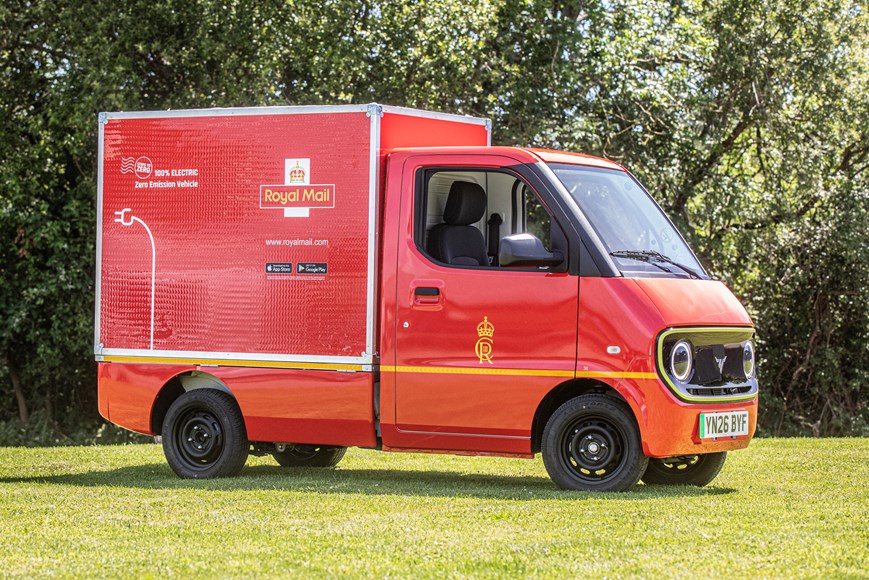
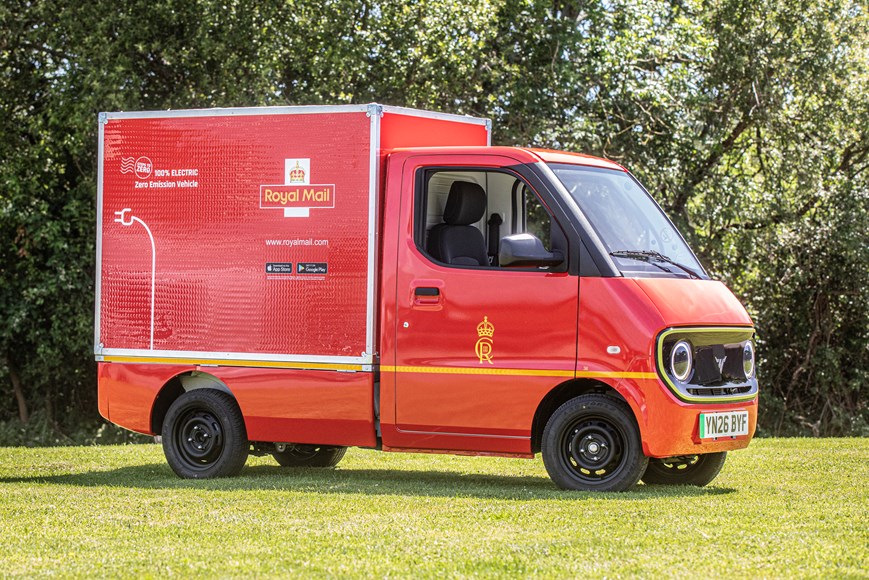
Royal Mail has expanded its zero emission fleet with 20 Neomor D01 micro electric vehicles (MEVs), which will be deployed on delivery routes across the UK.
Royal Mail continues to invest in innovative zero emission technologies to support faster, more sustainable deliveries for its customers. The new MEVs form part of its commitment to achieve a 100% zero emission final mile fleet by 2035 and to reach net zero by 2040.
The new MEVs will help the organisation improve efficiency on urban routes while reducing emissions. The Neomor D01’s compact design makes it well suited to dense urban environments where larger vehicles can struggle to access narrow streets and limited parking spaces. It charges from a standard three pin plug, removing the need for specialist charging infrastructure – a critical advantage for Royal Mail delivery offices with limited yard space or grid capacity. With up to a 290 kg payload and a 2.5 m³ cargo hold, they can comfortably cover a full postal round.
Manufactured by Derry under the Neomor brand, the D01 has so far been trialled for postal distribution, parcel delivery and cold chain logistics. JLC EV supplies and supports the vehicles through its Sussex headquarters, providing full aftersales service, parts supply and fleet management guidance to all UK customers.
Nathalie Hayes, director at JLC EV, said: ‘This deal with Royal Mail is exactly what JLC EV was built for. The D01 is a purpose built micro van proven across international logistics markets, and it’s now delivering for one of the UK’s most trusted institutions We are proud to help power the next chapter of Royal Mail’s zero emission last mile journey.’
Mark Riley, delivery design manager at Royal Mail, said: ‘We are always looking for smarter, greener ways to deliver for our customers. These micro electric vehicles are perfectly suited to busy urban routes, helping our posties navigate towns and cities more efficiently while reducing emissions. It is another important step towards our ambition of reaching net zero by 2040.’