
Logistics operators can reduce their total carbon emissions by up to a quarter by automating their warehouses, making it one of the most overlooked opportunities to reduce the industry’s carbon footprint.
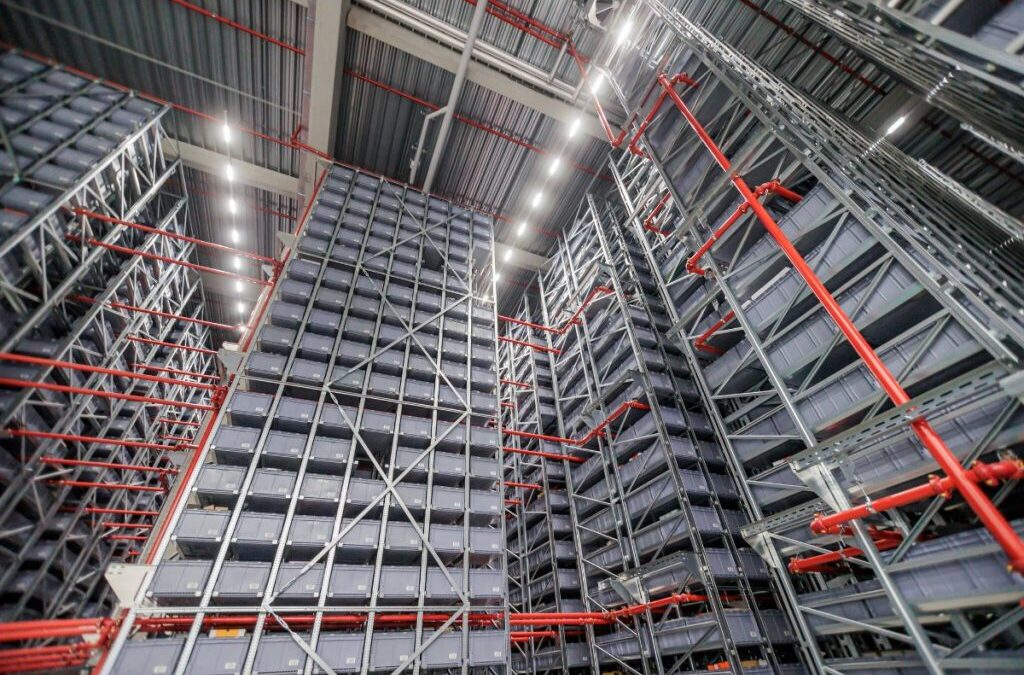
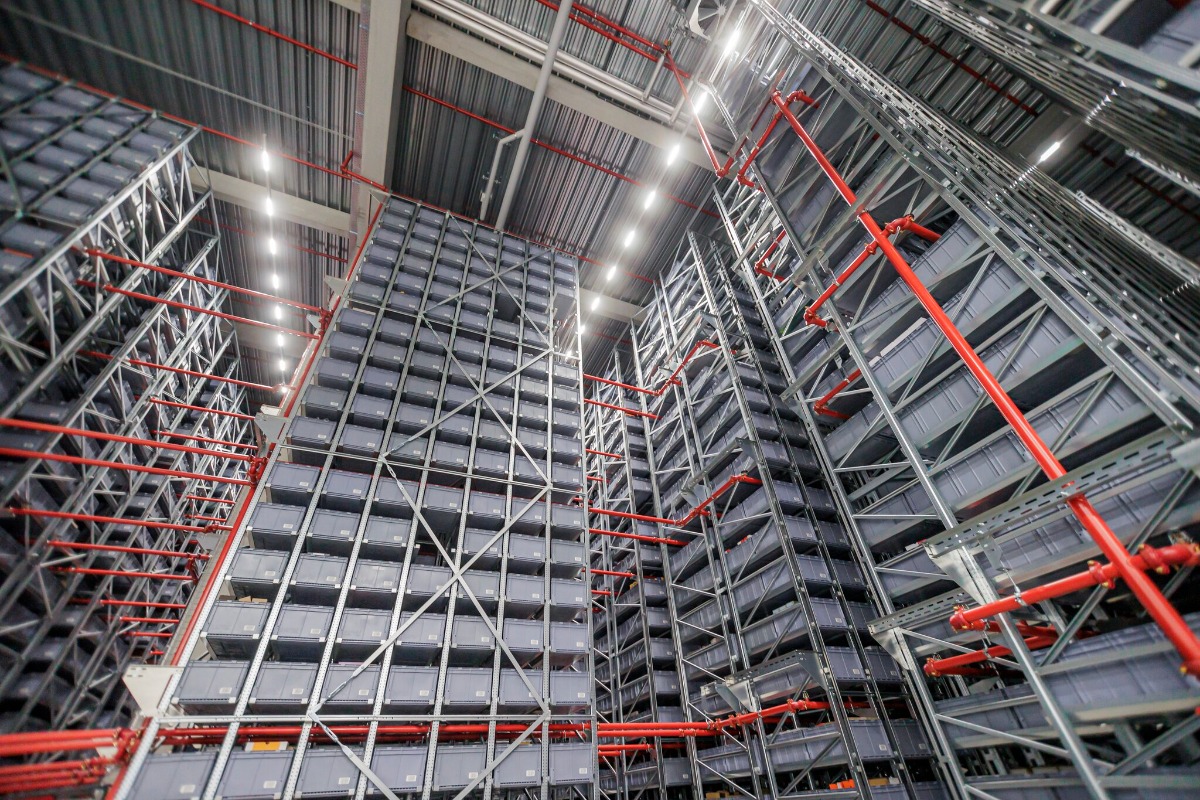
The savings are made by the increased density that warehouse automation offers, and by storing goods more densely and at height, warehouses can be built 40% smaller than with manual operation.
The findings come from two studies commissioned by global warehouse automation firm Exotec, with the results being included as part of Exotec’s annual ESG report.
‘In logistics, the focus of sustainability is often on transport, packaging and travel,’ said Andreas Stöckl, sales director for Exotec in Europe, ‘but when you can build upwards rather than outwards, the carbon footprint of a warehouse drops considerably.
‘A smaller, denser warehouse requires less building material, less land and less volume to heat. Heating accounts for the majority of a warehouse’s energy consumption, so reducing that is a must if warehouse operators are looking to reduce their carbon footprint.
‘Also, by storing more densely and at height, the same capacity can be achieved in significantly less space, allowing companies to avoid expanding or relocating to a larger facility, and save the emissions such expansion would entail.’
The first study was conducted together with ADEME, the French state agency for ecological transition, as a lifecycle analysis. The second was carried out with the global management consultancy Argon & Co, which compared five different picking technologies across a range of scenarios.
Both studies found that a building’s environmental performance is determined by two key factors – the building itself and its energy consumption. The single most powerful lever for reducing both is compactness.
Exotec’s report also contains an important nuance – warehouse managers are often more concerned with their site’s performance, how much stock needs to be stored, and how quickly it needs to go out, rather than its environmental impact.
Andreas continued, ‘The question for warehouse managers is often what increased warehouse performance costs, in both money and carbon. That is where automation can make a significant difference without the need to worry about altering floor space.
‘Whilst warehouse robotics do draw more electricity than manual equipment, the lower construction costs, heating consumption, and performance improvements more than makes up for it.
‘Automation is not about reducing floor space for its own sake, but about extracting maximum performance from every square metre you already have. That way you can grow without building anew, and that is where the real environmental gain lies.’
Beyond the studies, Exotec is working to reduce the carbon footprint of its own products, including its signature Skypod II automated warehouse system.
By using green steel – made from up to 80% scrap metal in electric arc furnaces – in the components for its Skypod II system, Exotec can reduce a solution’s carbon footprint by nearly a third (30%). This equates to more than 600 tonnes of CO₂ equivalent per system sold, or the annual energy consumption of 240 UK homes.
Since July 2025, the company has also included a carbon figure in every quote, so that customers can factor in climate impact as early as the procurement stage.
Andreas concluded, ‘UK logistics is coming under increasing pressure from their sustainability requirements, and warehouse operators are having to consider both the cost and climate impact of their warehouse solutions.
‘As suppliers, we will need to be able to set out the environmental cost of our systems in black and white, and have the data to prove our claims. If we don’t, the industry risks missing the biggest, most cost effective, opportunity to its cut emissions.’